
Craftsmanship
A watch strap takes some fifteen operations. Here is what lies behind every piece.
1. Choosing the skin
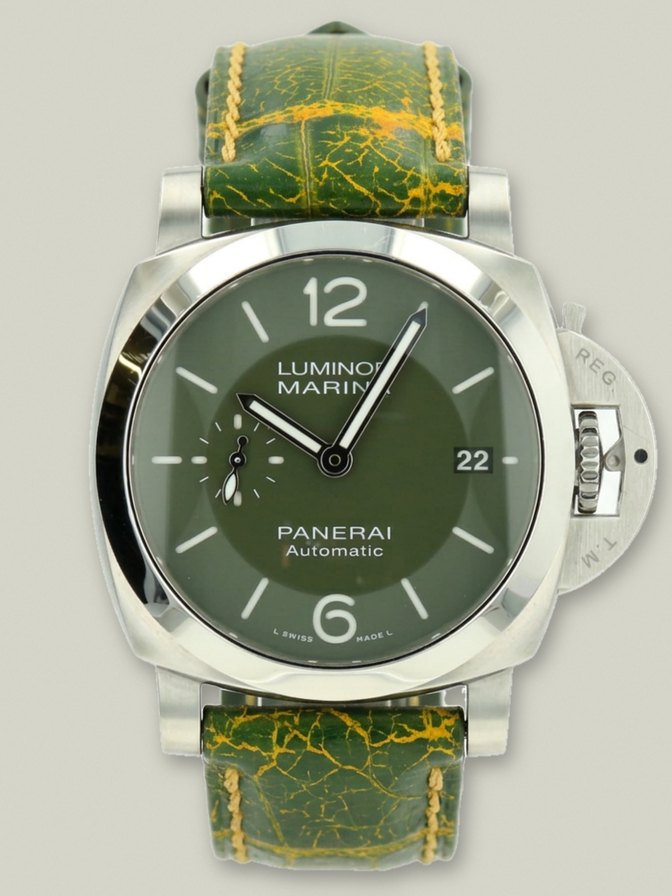
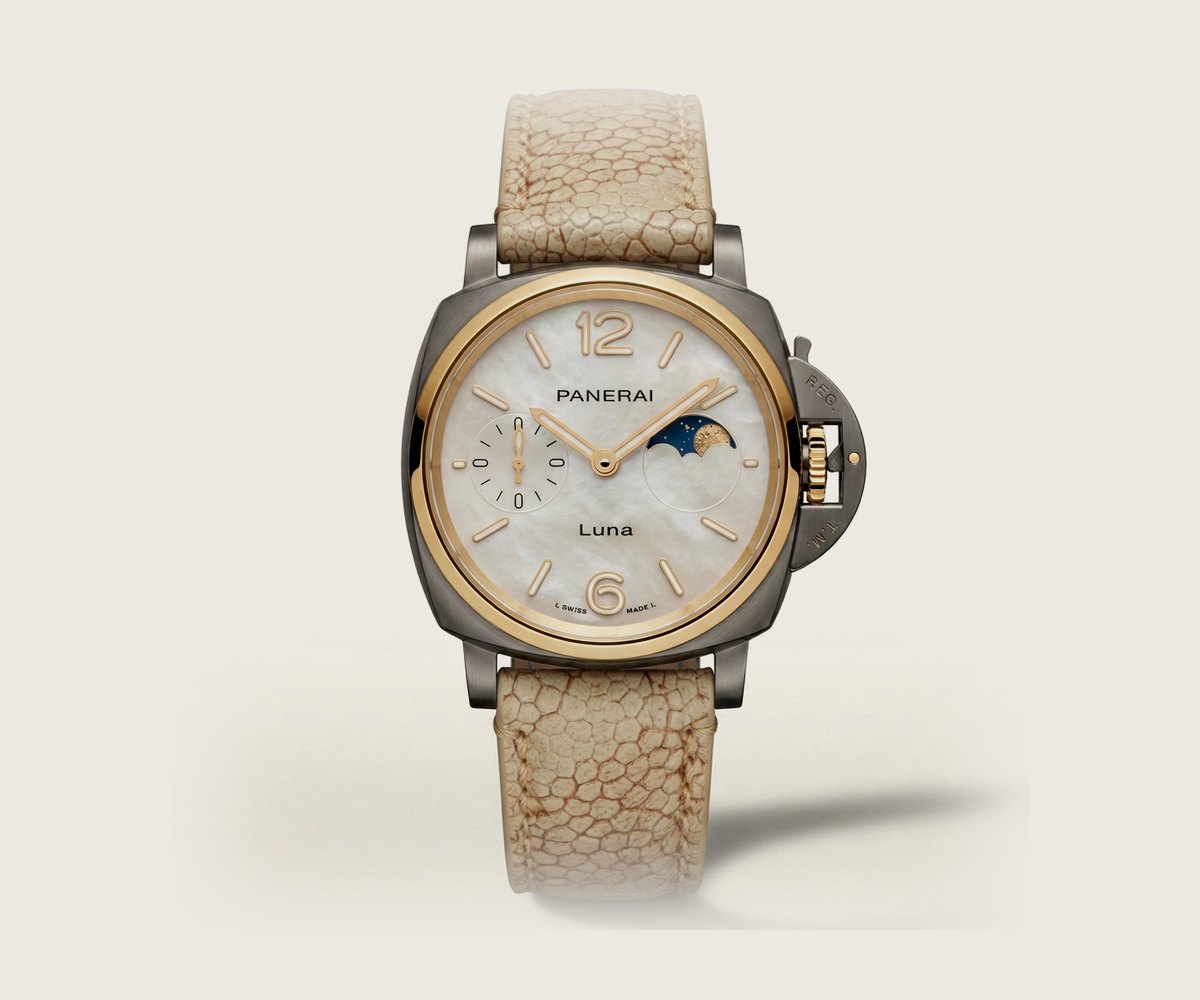
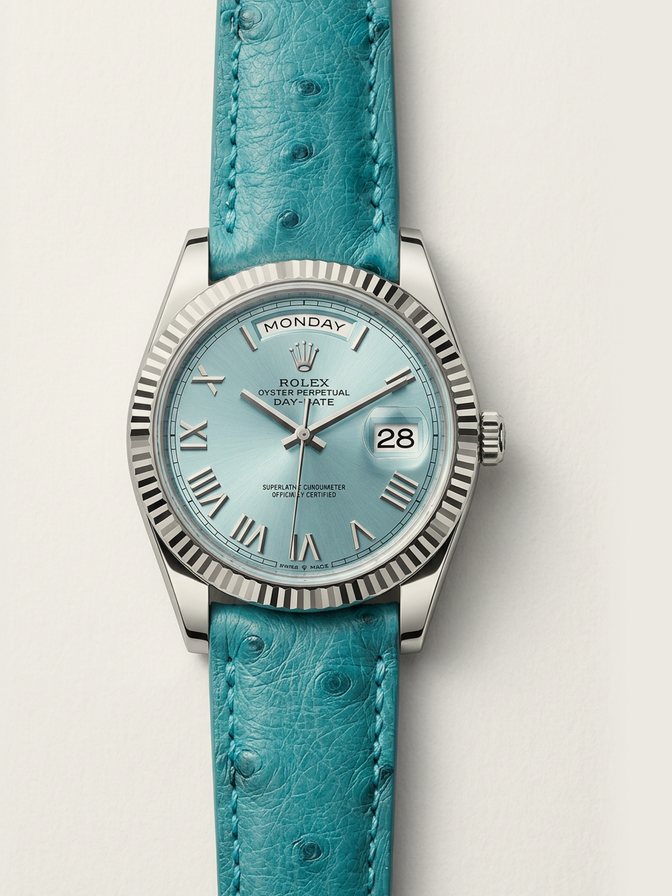
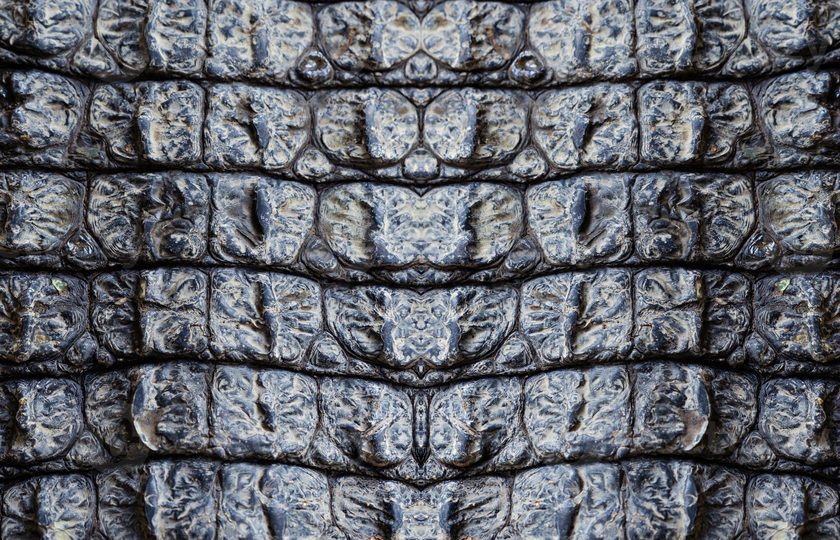
It all starts with selecting the skin and the area to cut. On alligator, the large square belly scales are placed in the centre of the strap; on ostrich, the area with the densest quills. No two straps are ever the same.
2. Cutting and skiving
The leather is cut with a round knife or a die, then skived: its edges are thinned so the strap is supple and the edges are slim.
3. Lining and padding
The skin is bonded to a sweat-resistant calfskin lining. For a padded strap, filling is added between the two.
4. Stitching
Stitching is done by machine, in a matching thread or one of our thread colours. As an option (+€35), it can be done entirely by hand with a saddle stitch: two needles pass through the same hole in opposite directions, and if a thread breaks, the stitching does not unravel.
5. Finishing the edges
Edges are sanded, dyed and burnished, coat after coat, until they are smooth and glossy.
6. Punching and checking
Holes are punched, keepers fitted, then each strap is checked before going into its case with its spring bars.
Fancy a one-of-a-kind piece? Design it in our bespoke configurator, or read our story.